
Central Florida summers are defined by a predictable daily rhythm. The morning sun bakes the sandy soil, humidity climbs, and by late afternoon, massive, slate-gray thunderheads tower over the horizon. For residents and business owners in Polk, Hillsborough, and Pasco counties, this display is a constant companion.
The morning after a major storm is often a scene of stark contrast. On one street, majestic oaks stand proud, their canopies intact. On the next, massive trunks lie splintered across roofs, power lines are dragged to the asphalt, and roads are blocked by heavy debris. Tree care professionals know a deeper truth: most of the structural damage a tree suffers during a hurricane happens long before the first gusts of wind arrive.
For property owners in Central Florida, the question is not whether to prepare, but how and when to do so. Getting the timing and the techniques right is essential for protecting your home, your family, and your commercial investments.
The Physics of the Canopy: Why Trees Fail in Florida
To understand how to protect your trees, you must first understand the physics of how they interact with hurricane-force winds. A healthy tree is designed to bend and sway to dissipate energy, but this natural defense breaks down when the canopy becomes too thick.
In the language of arboriculture, a full, dense tree crown behaves exactly like a sail. Wind does not care about the aesthetic beauty of your landscape; it cares about surface area and resistance. A solid, unpruned canopy catches the wind in the same manner as a spinnaker catches the breeze on a sailboat. Consequently, the force transfers directly to the trunk, the root system, and ultimately the anchor points holding the tree in the ground.
This physical leverage becomes even more dangerous when combined with Florida’s summer weather patterns. Hurricanes are preceded by days of tropical downpours that completely saturate our sandy soil. A tree’s root system relies on the friction of dry, compact soil to remain anchored. When that soil becomes a soft, muddy slurry, it loses its holding power, and hours of sustained wind can easily lever the entire tree out of the ground.
Proper canopy thinning selectively removes interior branches to reduce wind resistance while preserving the tree’s natural form and structural integrity. Think of it as converting a solid brick wall into a chain-link fence: still there, still functional, but letting the wind blow harmlessly through.
The Good, the Bad, and the Brittle: Removal Safety and Knowing Your Trees
Not all trees in Central Florida are created equal when it comes to storm survivability. Some species are naturally adapted to weather hurricanes, while others are notorious hazards that require constant vigilance.
Among the most vulnerable species in our region are Laurel Oaks and Water Oaks. While these oaks grow rapidly and provide quick shade, they develop weaker wood and shallow root systems as they age. Laurel oaks are highly prone to internal decay, meaning they can appear completely healthy on the outside while their structural core is rotting away. Water oaks are similarly short-lived as Florida oaks go and develop severe internal defects early in their lifespans. During a hurricane, these species are often the first to snap or drop massive limbs.
On the other end of the spectrum are Florida’s native survivors. The Live Oak and the Bald Cypress are the gold standards of wind resistance. These species have evolved over millennia to withstand tropical storms, utilizing deep root systems and highly resilient wood fibers.
A family-owned business like Real Lawn, which has spent nearly four decades managing Central Florida’s unique soils and canopies, understands that tree care is not a one-size-fits-all service. Identifying which trees on your property require urgent intervention and which ones simply need light structural maintenance is the first step in creating a resilient landscape.
The Danger of the “Quick Fix”: Self-Inflicted Florida Storm Hazards
When a hurricane warning is issued, panic often sets in. Chainsaws begin buzzing, and fly-by-night tree crews start knocking on doors, offering cheap, immediate “storm-proofing” trims. Unfortunately, the wrong type of pruning is often far worse than no pruning at all.
The first and most damaging practice is tree “topping,” also known as “hat-racking”. This involves cutting the main trunk or primary limbs back to blunt, flat stubs to reduce the tree’s height. Topping inflicts massive trauma on the tree. In response, the tree enters a panic state, rapidly pushing out dense clusters of “epicormic sprouts”, weak, fast-growing suckers, from the cut sites. These sprouts have no strong structural attachment to the wood below and snap easily in future storms. Furthermore, the large cut stubs rarely heal properly, leaving open entry points for decay fungi to rot the trunk from the inside out.
The second dangerous practice is “lion’s-tailing”. This occurs when an inexperienced crew strips out all the interior limbs, foliage, and branches, leaving only a tuft of leaves at the very ends of the limbs. Without interior foliage to dampen wind energy, the long, bare limbs whip violently, concentrating aerodynamic force at the branch tips and causing branches to snap under pressure.
Finally, the popular “hurricane cut” on palm trees is a widespread myth. Stripping a palm tree down to a tiny, vertical pencil-lead tuft of fronds does not protect it. The full, rounded canopy of green fronds is a palm’s natural protection and food source. Over-stripping starves the palm, stunts its growth, and weakens the new spear growth, making the palm more likely to fail in a storm.
The Science of Safety: ANSI A300 Standards and the 25% Rule
To ensure your trees are truly prepared to weather a storm without sacrificing their health, all pruning work should be performed in accordance with the ANSI A300 standards. Maintained by the International Society of Arboriculture, these science-backed standards define exactly how professional tree care must be executed.
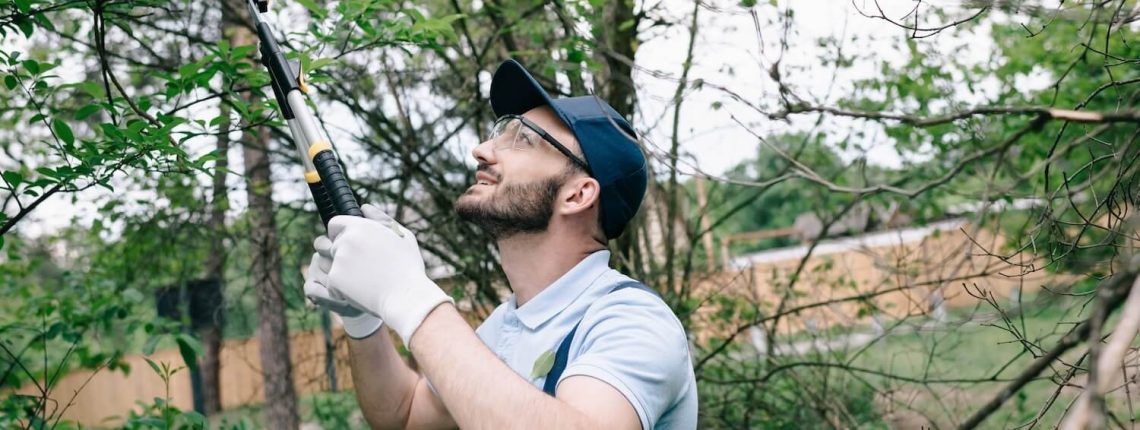
Under the ANSI A300 guidelines, proper structural pruning is a precise, targeted process. It includes:
- Crown thinning to selectively remove specific branches to improve light penetration and airflow while maintaining the tree’s natural shape.
- Crown raising to clear lower limbs away from roofs, utilities, and structural targets.
- Deadwood removal to eliminate dead, dying, or diseased branches that easily become dangerous projectiles in high winds.
- Subordination cuts to reduce competing trunks and encourage a strong, single central leader that carries the load evenly.
A critical component of these standards is the “25% Rule”. Professionals are strictly limited to removing no more than 25% of a tree’s live canopy during a single pruning session. Removing more than a quarter of the crown places immense stress on the tree, triggering emergency sprout growth and long-term decline.
This is why Real Lawn maintains a strict policy of active, hands-on involvement: Their owner works directly alongside the crews in the field every day, ensuring that every cut meets the highest professional standards. This commitment to quality and safety ensures that your trees are pruned to build long-term structural resilience, rather than being subjected to rushed, low-quality cuts that compromise their health.
The 2026 Insurance Angle: What Florida Property Owners Must Know
In 2026, proper tree maintenance is no longer just a matter of property aesthetics and safety, it is a critical financial and legal decision. Florida’s homeowners insurance market has become incredibly sophisticated. In the wake of active recent storm seasons, insurance underwriters are increasingly utilizing advanced aerial imagery and loss histories to evaluate property risks and set premiums.
To the modern insurance adjuster, a topped or poorly maintained tree is a documented liability. If a major storm hits and a neglected or topped tree crashes through your roof, your insurer may closely inspect the damage. If they determine that the tree failed due to pre-existing decay, topping wounds, or negligent maintenance, they can argue that the damage was entirely foreseeable. In some cases, this can lead to reduced or completely denied payouts.
In contrast, having your trees structurally thinned and maintained in compliance with ANSI A300 standards serves as documented proof of due diligence and proactive risk mitigation. Should a catastrophic storm still cause damage, this documentation can strongly support your insurance claim rather than undermining it.
It is also important for property owners to understand how standard Florida insurance policies handle fallen trees:
- If a tree hits an insured structure (such as your house, garage, or fence), the policy will usually cover the cost of removing the tree from the structure and repairing the physical damage.
- If a tree falls harmlessly in your yard without striking an insured structure, the cleanup and hauling costs are typically your responsibility.
- If a neighbor’s tree falls onto your property, your own insurance policy is responsible for covering the damage and removal, not theirs. It is a surprising reality that catches many homeowners off guard every storm season.
Timing is Everything: The Storm Prep Calendar
The secret to successful hurricane tree prep lies in the calendar. The absolute worst time to think about tree pruning is when a storm is named and heading toward the Florida peninsula. By that point, reputable, licensed tree services are already fully booked, and you are left vulnerable to predatory, unlicensed door-knockers who can do severe damage to your trees.
In Central Florida, the ideal window for heavy structural pruning and canopy thinning is late winter through early spring, specifically January through April.
This dormant season offers three distinct advantages:
- Trees are dormant, which dramatically reduces the physiological stress of pruning and lowers the risk of disease transmission.
- Without the heavy, dense canopy of late summer, it is much easier to clearly see the tree’s branch architecture and identify weak unions, cracks, or crossing limbs.
- It allows ample time for pruning wounds to heal and compartmentalize before the storm season begins.
Once June arrives, major canopy thinning should be avoided. Stressed trees with fresh, open wounds are the opposite of storm-ready. During the summer months, maintenance should be strictly limited to minor safety touch-ups, such as removing dead, diseased, or broken limbs whenever they are spotted.
Frequently Asked Questions
When is the best time to prune trees for hurricane season in Florida?
The ideal window for structural pruning and canopy thinning in Central Florida is late winter through early spring, typically between January and April. During this dormant period, trees experience less stress, and the lack of dense summer foliage allows professionals to clearly inspect the tree’s branch architecture for structural defects. Once hurricane season begins on June 1st, major pruning should be avoided, as fresh cuts can weaken the tree’s defenses during storm season; summer tree work should focus primarily on removing dead, diseased, or broken wood.
What is the “sail effect” and how does canopy thinning help?
The “sail effect” refers to how a dense, unpruned tree canopy catches wind during a storm, acting like a sail on a boat. Instead of letting the wind pass through, a thick canopy catches the force of the wind and transfers that immense stress directly to the trunk and root system. Professional canopy thinning selectively removes interior branches to reduce wind resistance. This converts your tree from a solid wind barrier into a permeable structure, allowing wind to blow through harmlessly and drastically reducing the risk of uprooting or snapping.
Why is tree topping considered dangerous?
Topping, or cutting main branches down to flat stubs, ruins a tree’s natural structure and inflicts severe shock. In response, the tree produces rapid, weakly attached shoots called epicormic sprouts. These sprouts have no structural strength and snap easily in future storms. Additionally, topping leaves large, open wounds that do not heal properly, inviting decay fungi to rot the trunk and primary limbs from the inside out.
Do “hurricane cuts” protect palm trees from high winds?
No, this is a dangerous myth. Stripping a palm tree down to a small, upright tuft of fronds actually starves the plant, stunts its growth, and weakens the new spear growth that is essential for its survival. Healthy green fronds act as natural wind buffers and are vital for the palm’s nutrition. Professional standards dictate that only dead or completely yellowing fronds should be removed.
Which tree species are most likely to fall during a Central Florida hurricane?
Laurel Oaks and Water Oaks are among the most storm-prone species in Central Florida due to their rapid growth, brittle wood, and high susceptibility to internal decay. Fast-growing pines and weeping figs also pose a higher risk in storm conditions. Conversely, properly maintained native species like Live Oaks and Bald Cypresses are highly wind-resistant survivors.
Will homeowners insurance cover a tree that falls in my yard?
Under most Florida homeowners policies, insurance will cover tree removal and property repairs only if the tree strikes an insured structure, such as a house, garage, or fence. If a tree falls in your yard without hitting anything, the cleanup and hauling costs are typically your responsibility. Additionally, if a neighbor’s tree falls onto your property, your own insurance policy is responsible for covering the damage and removal.
Tree Care Services Conclusion: Partnering for Peace of Mind
Our trees are an indispensable part of what makes Central Florida beautiful, providing cool shade, structural beauty, and a connection to the natural world. But owning mature trees in a hurricane-prone region comes with a deep responsibility. Protecting your property from the devastating forces of a major storm requires moving away from reactive, panic-driven decisions and embracing a proactive, science-backed approach to landscape management. By understanding tree biology, resisting destructive practices like topping, and adhering to professional pruning standards, you can ensure that your trees remain strong, resilient, and ready to stand tall against whatever nature throws our way.
Whether you are a homeowner looking to protect your family or a property manager overseeing a sprawling commercial development, partnering with Real Lawn ensures your trees are assets, not liabilities, when the winds pick up. Do not wait for a storm to appear on the radar to protect what matters most. Invest in the health, beauty, and safety of your landscape today, and enjoy the peace of mind that comes with decades of local hands-on expertise.